
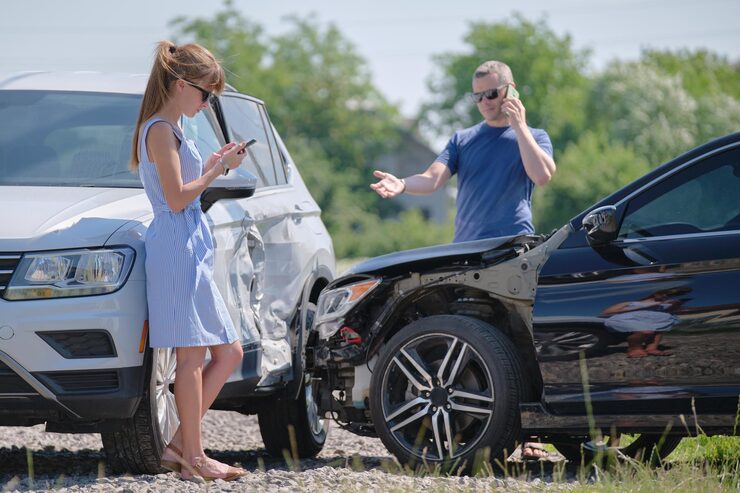
What Happens If You Were Partially at Fault for a Car Accident?
We get some version of this call constantly at Hereth Insurance Consulting: “I think part of this was on me — am I just out of luck?” If you’re calling from Missouri, here’s the short version of good news: a partially at fault car accident almost never means walking away with nothing.
Missouri runs on what’s called pure comparative fault, a rule the Missouri Supreme Court adopted in Gustafson v. Benda back in 1983. There’s no cutoff percentage that erases your claim entirely. Even if you’re found 70%, 80%, or 90% responsible in a partially at fault car accident, you can still recover whatever share of your damages the other driver’s fault covers. That’s meaningfully more forgiving than what plenty of other states use — some cut a driver off completely once their share crosses 50%, and a small handful still follow a stricter rule where even 1% of fault can block recovery outright. Missouri simply doesn’t work that way.
That said, the percentage still matters enormously, since it directly decides how much of your damages you actually collect after a partially at fault car accident. Insurance adjusters know exactly where the real negotiation lives, and understanding how that number gets calculated before you sign anything is worth every bit of the ten minutes it takes to read through.
How Missouri's Pure Comparative Fault Actually Plays Out
Picture a real scenario: another driver blows through a red light and causes the overwhelming majority of the damage, but you were going a few miles over the limit through the same intersection on a green light. Under Missouri’s rule, that sliver of shared responsibility on your side — even just 5% or 10% — still gets subtracted from your recovery. Adjusters actively look for exactly this kind of contributing detail, because every percentage point they can pin on you is money they don’t have to pay.
That’s the trade-off baked into pure comparative fault. There’s no hard wall that zeroes out your claim the way some states impose, but there’s also no floor protecting you from a fault percentage creeping higher than it honestly should. Multi-vehicle pileups and accidents with conflicting witness accounts are where this gets genuinely contested, since a swing of even 10 or 15 percentage points on a sizable claim can mean thousands of dollars either way.
Common everyday scenarios illustrate this well. A rear-end collision where the front driver slammed the brakes hard for no clear reason can split fault between both drivers rather than landing entirely on the person who hit from behind. A pedestrian struck outside a marked crosswalk might share some responsibility even when the driver was speeding. Each of these situations involves genuinely shared responsibility, and exactly how that gets divided can swing your outcome substantially.
How Insurers and Investigators Actually Determine Fault
Fault doesn’t get decided by a coin flip — it’s built from evidence, and the quality of that evidence is what determines whether the final percentage feels fair or not. Police reports form the backbone of most determinations, supplemented by photographs, witness statements, and increasingly, dashcam or event-data-recorder information pulled from the vehicles themselves. Adjusters weigh all of it against local right-of-way rules and traffic laws to reconstruct what actually happened in the handful of seconds that mattered.
This is exactly where thin documentation costs people real money. A missed witness, a police report that never asked the right follow-up question, or an adjuster who didn’t bother checking who actually had the right of way can shift a fault percentage against you without anyone intending anything malicious — it’s simply what happens when the full picture never gets assembled properly. We tell every client the same thing: be genuinely careful about giving a detailed recorded statement to any insurer, including your own, before you’ve had time to gather your own evidence and think clearly about the sequence of events.
Contributory factors can show up in surprising places too. A rear-end collision seems straightforward until investigators discover the front vehicle had a non-functioning taillight — suddenly a driver who was rear-ended through no apparent fault of their own picks up a real percentage of blame for equipment they never thought twice about. This is exactly why a full inspection of both vehicles, not just the point of impact, matters more than people expect going in.
How Your Settlement Actually Shrinks (Or Doesn't) With Shared Fault
Let’s run real numbers, since abstract percentages mean nothing until they’re attached to an actual dollar figure. Say your total documented damages come to $70,000, and you’re found 30% at fault for the crash. Missouri’s pure comparative rule knocks $21,000 off the top, leaving you with roughly $49,000 — reduced, but very much not zero.
Push that further: even at 70% fault, you’d still recover 30% of a $100,000 claim, or $30,000. That’s the entire point of pure comparative fault as a system — your percentage shrinks your check, but nothing short of 100% wipes it out completely. Contrast that against a modified comparative fault state, where crossing a 50% or 51% threshold means the exact same driver, with the exact same damages, recovers absolutely nothing regardless of how the remaining percentage would’ve worked out.
This is precisely why insurance companies fight so hard over a handful of percentage points. A shift from 25% to 35% fault on a $100,000 claim is worth $10,000 either direction, and adjusters know that math cold even when they never say it out loud. If your vehicle was totaled in the process, this is also a good moment to double-check whether you have gap insurance on file, since a reduced settlement combined with an outstanding loan balance is exactly the scenario gap coverage exists to soften.
Disputing a Fault Determination You Don't Agree With
Initial fault findings aren’t always right, whether they came from a responding officer’s quick assessment at the scene or an adjuster’s later review of the file. If you’re told you’re mostly to blame and that doesn’t match your own memory of events, ask for the determination in writing and compare it directly against your own photos, notes, and any records you kept. Mistakes and gaps happen more often than people assume, largely because reconstructing a fast-moving event from limited evidence is inherently imperfect work.
A few things help before you push back. Statements given right at the scene, while you’re still shaken and adrenaline’s running, can read very differently once they’re written down and picked apart later — sticking to plain, observed facts rather than speculation protects you here. If a dispute escalates, your own documentation — photos, witness contact information, dashcam footage — carries far more weight than a more convincing verbal account after the fact, since fault reviews are ultimately won on the strength of what’s actually on file.
For larger claims where a meaningful percentage difference is on the table, that’s a reasonable point to bring in an attorney who handles fault disputes directly. We’re not attorneys at Hereth Insurance Consulting and don’t represent clients in a legal dispute over fault, but we can absolutely help you understand how a given fault percentage affects your coverage, your renewal rates, and your broader options — and point you toward legal help when a case genuinely calls for it.

Medical Bills and Lost Wages When Fault Gets Split
Here’s something that trips people up: your total damages — medical expenses, lost wages, every documentable loss — get calculated in full first, before your fault percentage ever enters the math. Only once that full number is locked in does the percentage reduce what actually lands in your account.
In the meantime, your own coverage can bridge the gap while the claim works through review. Medical payments coverage (MedPay) or personal injury protection (PIP), where you carry it, typically pays medical bills regardless of fault while the larger claim is still being sorted out. A $5,000 MedPay limit, for instance, could realistically cover an ER visit and initial follow-ups, with anything beyond that folding into the final settlement calculation once fault percentages are settled.
Can You Still Recover Pain and Suffering With Shared Fault?
Yes, and this surprises a lot of people who assume shared fault only affects the dollar-and-cents damages. Even with a real percentage of fault attached to your name, you can still pursue non-economic damages tied to how the accident actually affected your life — pain and suffering, emotional distress, loss of enjoyment of everyday activities, and long-term physical limitations that never show up on a repair invoice or medical bill.
These get reduced by your fault percentage exactly the same way economic damages do, so the math doesn’t change, just the category. Because non-economic damages are inherently harder to quantify, real documentation matters even more here — medical records, a personal journal tracking your recovery, even statements from family or friends who’ve watched the impact firsthand all carry genuine weight when it’s time to prove this part of your claim.
Will Your Insurance Rates Go Up After a Partial-Fault Accident?
Almost always, at least somewhat. Expect a bump at your next renewal, with the size depending on your assigned percentage of fault, whether the other driver carried the larger share of responsibility, and your driving history leading up to the accident. Keeping organized records of the claim on hand gives you something concrete to point to if you ever need to challenge an increase that feels disproportionate to your actual share of fault.
Rating practices vary by carrier, and some policies include accident forgiveness provisions that can soften the impact on a partial-fault claim specifically — worth asking your agent about directly rather than assuming you’re stuck with whatever number shows up at renewal. If rising premiums have already been frustrating you before this accident even happened, our piece on why insurance is too expensive digs into the bigger picture, and our guide on reducing property insurance costs covers practical moves that apply across your broader coverage, not just auto.
When the Stakes Get Bigger: Serious Injuries and Limited Coverage
Larger accidents raise the stakes on all of this considerably. Your recovery is capped not just by your own fault percentage, but by however much insurance actually sits behind the other driver’s policy — and that’s precisely the scenario where uninsured/underinsured motorist (UM/UIM) coverage earns its reputation, stepping in when the at-fault driver simply doesn’t carry enough to cover what you’re genuinely owed. If you’ve ever wondered exactly how that layered protection works, our breakdown of stacked vs. unstacked insurance covers precisely this kind of scenario in more depth.
Accidents involving commercial vehicles or work trucks complicate the picture even further, since fault split across multiple parties often means untangling multiple policies at once rather than a clean two-driver dispute. We see this constantly with business-owned fleets, which is a big reason we point business owners toward our guide on commercial insurance costs — the exposure looks fundamentally different once vehicles are being used for work rather than personal errands. Contractors specifically should take a look at contractor insurance in Missouri, since a work truck involved in a partial-fault accident opens up an entirely different set of insurance considerations than a personal vehicle would.
What to Do Right After a Crash, Whether Fault Feels Clear or Not
Here’s the practical checklist we hand to clients and friends alike. Call 911 and get an official crash report on file — never settle for a verbal understanding at the scene, no matter how reasonable the other driver seems in the moment. Document the scene thoroughly: wide shots of the full intersection or road layout, close-ups of vehicle damage, and anything showing traffic signals, weather, or visibility conditions at the time.
Get checked out medically even if you feel fine in the moment — plenty of injuries, especially soft-tissue ones, don’t show symptoms until a day or two later, and skipping this step is one of the easiest ways to weaken your own position down the road. Preserve everything else too: dashcam footage, relevant phone records, repair estimates, and any photos either side posted afterward. And avoid giving a recorded statement to any insurance company, including your own, until you’ve had a chance to think clearly and gather your own version of events.

Your Responsibilities After the Accident
Regardless of how fault ultimately gets divided, a few concrete steps protect you and keep you compliant with what your insurer expects. Contact your insurance company promptly and report the accident, sticking to accurate, factual information throughout every conversation. Cooperate with whatever investigation follows, hand over documentation when it’s genuinely requested, and take the time to understand your own financial exposure clearly rather than assuming the worst or the best without checking.
Property damage adds its own layer worth understanding too — if the accident affected more than just your vehicle, our home insurance in Missouri guide covers a lot of the same “know what you’re actually protected against” thinking that applies here.
What If the Other Driver Shares Real Responsibility Too?
When it’s genuinely a two-way street, resist any urge to start admitting fault at the scene — even a casual “I’m sorry” can end up read as an admission later, whether in an insurance file or a legal proceeding. Call emergency services so there’s official documentation, then gather your own independent evidence: photos, vehicle damage from multiple angles, and contact information from anyone who witnessed it. Detailed records from both sides are exactly what establishes an accurate split of responsibility, and that split directly shapes both the insurance settlement and any legal claims that might follow.
At Hereth Insurance Consulting, straight talk without jargon or runaround is what we’ve built our reputation on — honest answers about how a partial-fault situation genuinely affects your outcome, your claim, and your bottom line. We’ve seen a well-documented case turn around completely simply because the client refused to accept an insurer’s first offer at face value, and we bring that same evidence-focused mindset to every client who calls us confused about where an insurer’s position actually came from.
The Bigger Picture: Fault Affects More Than Just This One Claim
A fault dispute rarely stays contained to a single claim — it bleeds into your premiums, your liability coverage decisions, and every renewal that follows. Plenty of clients come to us after an accident already juggling other coverage questions entirely, which is exactly why we also cover topics like renters insurance requirements in Virginia and whether condo insurance covers water leaks — insurance rarely stays confined to just one policy once something actually goes wrong.
If you’re a homeowner dealing with property questions alongside an auto claim, our piece on whether home insurance covers asbestos removal is worth a look too. From cyber insurance for small business owners to everyday auto claim questions, Hereth Insurance Consulting has spent real time in the trenches with Missouri clients, something you can see for yourself in our recap of a year of momentum at Hereth Insurance Consulting. A second set of eyes on a partial-fault situation, before you sign anything an insurer hands you, is almost always worth the short conversation it takes. Drivers with nonstandard policies can also read what to know about Peak Property and Casualty Insurance, one of the underwriters behind Dairyland policies.

Frequently Asked Questions
Can I still get compensation if I was in a partially at fault car accident?
Yes. In most comparative negligence states, you can still recover money even after a partially at fault car accident — your payout just gets reduced by your percentage of fault. The exception is pure contributory negligence states, where even 1% fault can block your claim entirely.
What happens if I'm found more than 51% at fault in Texas?
Under Texas’s 51 percent bar rule, if you’re found 51% or more responsible for the crash, you can’t recover anything from the other driver’s insurance. Staying under that line is the whole game in a Texas car accident claim.
Does Missouri follow pure or modified comparative negligence?
Missouri follows the “pure comparative negligence doctrine,” meaning you can recover damages even if you were, say, 90% at fault — your award just shrinks by that same percentage. It’s more forgiving than states with a 50/51 cutoff.
How does California's comparative fault law affect my payout?
California has used pure comparative negligence since 1975. Every driver is financially responsible for their own share of fault, so even being 70% at fault in a partially at fault car accident in Los Angeles won’t zero out your claim completely — it just gets cut down proportionally.
Will admitting partial fault at the scene hurt my claim?
Yes, almost always. Even a casual “sorry, I didn’t see you” can be used against you later by an insurance company. Stick to facts, exchange information, and let the evidence — not a stressed-out comment at the scene — determine fault.
Do I need a lawyer for a partially at fault car accident, or can I handle it myself?
You can technically handle a small, clear-cut claim yourself, but once an insurer disputes your fault percentage, or your damages get into real money, a car accident lawyer typically pays for themselves by fighting unfair fault assignments and protecting your non-economic damages too.
Can my insurance rates go up even if the other driver was mostly at fault?
Sometimes, yes. Even a smaller percentage of fault can trigger a rate bump at your next policy renewal, though the increase is usually much smaller than if you were primarily responsible. Ask your insurer about accident forgiveness before you assume the worst.
What's the difference between economic and non-economic damages in a shared-fault claim?
Economic damages cover measurable losses like medical bills and lost wages, while non-economic damages cover things like pain and suffering or loss of enjoyment of life. Both get reduced by your percentage of fault, but you’re entitled to pursue both — even when you share blame for the crash.