

Does Condo Insurance Cover Water Leaks?
A client called us last winter in a bit of a panic. Water was dripping through her bedroom ceiling, and she had no idea if it was coming from the unit above her, a pipe inside her own walls, or something to do with the building’s shared plumbing. She didn’t know who to call first — us, her HOA, or a plumber — and honestly, most condo owners are in the exact same boat the first time this happens.
Does condo insurance cover water leaks? In most cases, yes — a standard condo policy is designed to respond to sudden, accidental water events. But the real answer depends on three things: where the water actually started, how quickly it happened, and whether basic maintenance could have stopped it before it became a problem.
There’s a shorthand adjusters use that’s worth memorizing: water that falls is usually covered; water that rises usually isn’t. A pipe that bursts behind your wall or a hose that fails on your washing machine is a “falling” event, and it typically gets paid. Sewage that backs up through a drain, or groundwater that seeps in from below, is a “rising” event, and standard policies exclude it by default unless you’ve specifically added coverage for it.
Your HO-6 policy — the technical name for standard condo insurance — protects what’s often called the “walls-in” portion of your home: interior walls, flooring, cabinets, appliances, and your personal belongings. The building’s shell and shared systems generally sit with your association’s master policy instead. Not every drip gets treated the same way, though. A sudden pipe burst is a completely different insurance conversation than water that’s been slowly seeping in for months because nobody noticed or fixed it.
We’ve walked plenty of Missouri condo owners through exactly this confusion at Hereth Insurance Consulting, and it almost always comes down to two things: knowing your own policy’s fine print, and knowing exactly where your association’s responsibility stops and yours starts. This kind of client conversation has come up constantly over the past year, something we touch on in our recap of a year of momentum at Hereth Insurance Consulting.
Quick Answer: What's Covered vs. Not Covered
A burst or frozen pipe inside your own unit — generally covered. A slow leak from a worn seal or a fixture nobody maintained — generally not covered. An appliance hose or dishwasher failure — usually covered, though often with a lower payout cap. Water traveling in from a neighbor’s unit — your own HO-6 policy typically responds first, with reimbursement worked out between the two insurance companies afterward.
A leak that starts in a hallway, lobby, or shared wall — that’s the association’s master policy, not your individual coverage. Sewer backup or a failed sump pump — not covered unless you’ve added a specific water backup endorsement. Flooding from rising water or heavy rain — never covered under a standard HO-6 policy; that requires its own separate flood policy. Mold tied to a fast, promptly reported leak — usually covered, subject to a mold-specific cap. Mold tied to a slow, unreported leak — usually denied outright.
Why This Question Comes Up So Often in Missouri
Condo living has expanded steadily across Missouri over the last decade, and shared-wall buildings come with a specific kind of plumbing headache single-family homes simply don’t have. A pipe running behind a common wall doesn’t care which unit sits closer to it, and once something fails, water rarely respects the boundary between “your space” and “your neighbor’s space.” That reality puts condo owners in a genuinely different risk category than homeowners, one where a neighbor’s plumbing failure can become your emergency within minutes.
Age of the building matters more than most owners realize going in. A structure from the 1980s or earlier is statistically far more likely to produce a burst pipe or a hidden slow leak than something built in the last decade, simply because decades-old plumbing systems and fixtures wear out and fail more often than newer installations. Columbia and the surrounding area have plenty of these older buildings still in active use, and owners there genuinely need to think through this coverage question more carefully than someone in a newly built complex would.
There’s no way around it — the honest answer to “am I covered” almost always comes down to specifics no generic article can fully settle for you, since your specific association’s governing documents and your specific policy’s language both carry real weight. The exact same burst pipe plays out completely differently depending on whether it happens inside your unit or inside a shared wall, and understanding that distinction before disaster strikes saves an enormous amount of frustration when an actual claim is on the line.
What Condo Insurance (HO-6) Actually Is
An HO-6 policy exists specifically for condo unit owners, layered underneath whatever protection your building’s master policy already provides. Rather than insuring an entire structure the way a standard homeowners policy would, it covers the “walls-in” portion of your home — interior finishes, built-in cabinets, flooring, personal belongings, and typically liability protection if someone’s hurt inside your unit or you accidentally cause damage to a neighboring one. Both the Insurance Information Institute and the National Association of Insurance Commissioners frame it the same way industry-wide: the unit owner insures their own unit, and the association’s master policy handles the structure and common-area exposure.
Most mortgage lenders require this coverage as a condition of the loan, and it remains one of the more misunderstood products in the entire insurance world. Missouri condominium associations also operate under the state’s Uniform Condominium Act (Chapter 448 RSMo), which establishes baseline governance and insurance obligations, though the actual split between a bare-walls policy and an all-in master policy generally comes down to the association’s own bylaws rather than being dictated directly by the statute. [VERIFY: confirm current RSMo Chapter 448 insurance language before publishing, since statutory provisions should be checked against the current Missouri Revisor of Statutes site rather than assumed static]
A lot of owners assume the association’s coverage is a safety net for everything, right up until an actual claim proves otherwise. We’ve had Missouri clients come to us after a burst pipe genuinely believing the master policy would handle their ruined flooring and cabinets, only to find out their own HO-6 was responsible for that specific piece of the loss. Even long-time, experienced owners get caught off guard by this, which is exactly why reading your declarations page before a claim — not during one — saves so much back-and-forth.
One feature worth knowing about specifically: loss assessment coverage, typically bundled into an HO-6 policy, which can help pay your individual share if a major shared-property claim exceeds what the master policy actually covers. Widespread water damage through common areas is a classic scenario where this kicks in, and it’s quietly saved several of our clients real money when a building-wide claim outran the master policy’s limits and the remaining balance got split among all the unit owners.
Master Policy vs. Your HO-6 Policy
Almost every first-time condo buyer stumbles on this exact distinction, and it’s genuinely one of the most common questions we field in our office. The master policy — held by the association or HOA — generally covers the building’s structure, common areas, and shared systems: the roof, hallways, elevators, and the plumbing running through shared walls. Your HO-6 picks up whatever the master policy leaves out — the inside of your specific unit, your belongings, and any upgrades you’ve made since moving in.
Here’s where it gets genuinely important to check rather than assume: some associations carry what’s called a bare-walls master policy, covering only the unfinished structure — studs, subfloor, the building shell — while others carry an all-in or single-entity policy that also includes original fixtures and finishes like cabinets, countertops, and flooring exactly as they existed when the unit was first built. That single distinction dramatically changes what your own HO-6 policy actually needs to cover on top of it, and it’s not something you want to discover for the first time while standing in a flooded kitchen trying to figure out who’s paying for what.
Before renewing or purchasing, pull your association’s governing documents and confirm exactly which type of master policy applies — the same kind of due diligence we’d recommend before any shared-property renovation, similar to what we cover in our Missouri home insurance guide. A short call to your HOA’s management company usually clears this up in minutes if it isn’t already spelled out plainly.
What Water Damage Is Typically Covered
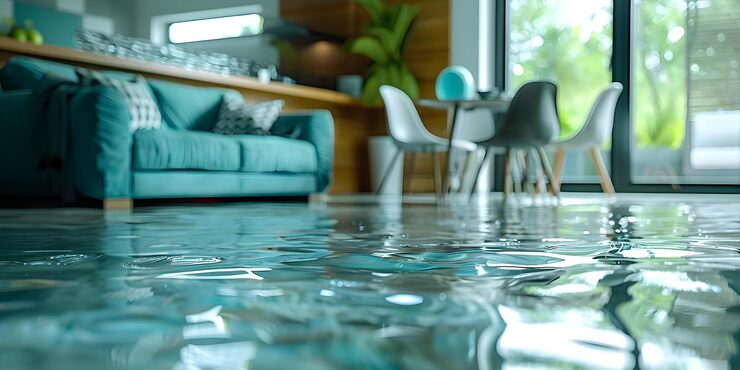
Most standard condo policies operate on one central idea: sudden, accidental water damage gets paid; slow, gradual damage generally doesn’t. If a supply pipe hidden inside your wall suddenly fails, your policy typically steps up for water extraction, drywall replacement, repainting, and repairing cabinetry, sinks, and tile damaged in the process. Ruined furniture and electronics usually get folded into that same claim too, as long as the underlying cause wasn’t a slow leak left unnoticed for months — insurers push back hard on that particular scenario specifically.
Appliances cause more of these calls than people expect walking in. A leaking dishwasher, a failing washing machine hose, or a cracked refrigerator water line are some of the most common reasons Missouri condo owners end up on the phone with us. When it’s a genuine appliance malfunction or hose failure, water removal coverage typically kicks in — though watch for a sub-limit, sometimes capped in the low thousands, which may not stretch far enough to cover a full appliance replacement on top of the actual water damage.
Weather deserves its own mention. Wind-driven rain forcing its way through a window frame or door seal, or seeping in through exterior cracks after a storm, is usually covered for mitigation once your deductible is met — and this can extend to interior damage from a roof leak even though the roof structure itself typically remains the association’s responsibility to insure and maintain.
This becomes especially relevant if your building is mid-renovation: a contractor performing a re-roof or roof replacement who leaves the structure exposed during a storm, or who improperly reseals a section, can trigger interior water damage that genuinely muddies the “who pays” question — was it a covered accident, or a contractor’s workmanship failure that shifts liability onto the contractor’s own insurance instead? That’s exactly the kind of scenario worth a direct conversation with your agent the moment it happens, rather than assuming either your HO-6 or the master policy automatically picks it up.
If a covered leak leaves your unit genuinely unlivable, most policies also provide additional living expenses (ALE) — temporary housing, meals, sometimes storage — while repairs happen. This typically runs up to somewhere around 12 months, though the exact cap varies meaningfully by carrier and policy. [VERIFY: confirm ALE duration language against current Hereth-recommended carrier policies before publishing, since this term varies more than most other coverage provisions]
Restoration professionals and adjusters also classify water damage using standards published by the Institute of Inspection, Cleaning and Restoration Certification (IICRC). Water gets sorted by contamination level into three categories — clean water from a supply-line break, gray water from something like dishwasher discharge, and black water from sewage or floodwater — and by volume and drying difficulty into four separate classes. This has a real practical impact: a clean Category 1 leak reported and dried within 24 to 48 hours is far less likely to spark a mold dispute later than the exact same leak left sitting untreated for several days.
What Water Damage Is Typically Not Covered
This is where owners most often get blindsided, so it’s worth stating plainly. Damage originating in common areas — hallways, lobbies, basements, roofs, or shared pipes running through common walls — generally isn’t the individual owner’s responsibility to insure; that falls to the master policy instead. Your own coverage might still respond to secondary damage that spreads from a common area into your specific unit, but the source of the problem itself belongs to the association. The precise line between “your unit” and “common area” gets defined in your association’s Covenants, Conditions & Restrictions (CC&Rs) and bylaws, which is exactly why pulling that document ahead of time, rather than mid-crisis, prevents so much back-and-forth.
[VERIFY: whether Missouri has any statute functioning similarly to Florida's Condominium Act §718.111, which can override association bylaws on water-damage responsibility — this varies meaningfully by state and is worth confirming with your agent or attorney rather than assuming Missouri mirrors another state's framework.]
External flooding is close to a universal exclusion. Heavy rain, overflowing rivers, and rising groundwater get treated as a fundamentally different category of risk, since they affect entire communities simultaneously rather than being a single-property accident — which is exactly why flooding requires its own separate flood insurance policy with its own eligibility rules and pricing. Even with a flood policy in place, condo coverage under it typically only extends to your unit’s interior, not shared spaces or exterior walls, which remain under the building’s master coverage.
Then there’s the quieter, slower category that catches even careful owners. Gradual damage, a long-running leak nobody noticed, pre-existing conditions, or general deterioration tied to deferred maintenance — corroded pipes, failing grout — get treated by nearly every insurer as preventable rather than accidental, and that classification is a fast route to a denied claim. Sewer backups, floor drain backups, and sump pump failures fall under this same broad exclusion by default, unless you’ve specifically added an endorsement to bring them back into coverage.
Does Condo Insurance Cover Water Damage From a Neighbor's Unit?
This scenario deserves its own dedicated section, because it comes up constantly and genuinely confuses people every single time it happens. If water travels from a neighboring unit into yours — their washing machine hose fails and floods down through your ceiling, say — your own HO-6 policy typically responds first, regardless of whose unit actually caused the problem. You file with your own insurer, they pay for your repairs, and the reimbursement conversation happens later, between the two insurance companies, through a process called subrogation.
Here’s a legal nuance that surprises a lot of owners: a neighbor isn’t automatically financially responsible just because water happened to originate in their unit. Under general insurance and liability principles that carry over into most states, the unit where water started is only legally on the hook for damage to other units if negligence or an intentional act is actually involved — leaving a bathtub running unattended, ignoring a known leak for weeks, that sort of thing.
A sudden, unforeseeable pipe failure with no negligence behind it is typically treated as nobody’s fault in the liability sense, even though it still triggered real damage next door — which is exactly why your own policy responding first, rather than waiting to establish blame, matters so much.
This system exists specifically so you’re not stuck waiting on someone else’s insurance company before your own repairs can even begin. If your neighbor genuinely was negligent, your insurer can pursue their carrier for reimbursement once your claim is settled and repairs are already underway — you generally don’t have to wait around for that dispute to resolve first.
Things get more layered when water travels through a shared wall or common structural element on its way into your unit, since that can shift part of the responsibility onto the association’s master policy depending on exactly where the failure originated. This is precisely the kind of situation where reading your association’s governing documents in advance, rather than mid-crisis, makes an enormous difference in how smoothly the whole process actually plays out.
Who Pays When the Leak Starts in Common Areas
Hallways, stairwells, shared basements, and building-wide plumbing systems generally fall under the association’s master policy, not any individual owner’s coverage. If a pipe running through a shared wall bursts and soaks the hallway carpet, that repair cost generally belongs to the association — not whichever unit happens to sit closest to the mess.
The complication arrives the moment that same water crosses from a common area into your individual unit. HOA insurance generally stops covering water damage once it starts affecting your personal belongings, your upgraded finishes, or your additional living expenses if you’re temporarily displaced. That gap is precisely why an HO-6 policy exists alongside the master policy in the first place, and it’s why owners who skip it, or meaningfully underinsure it, often end up paying out of pocket for damage they genuinely assumed was someone else’s problem to solve.
Worth noting if you’re renting your unit out: your tenant needs their own separate renters policy, since neither your HO-6 nor the association’s master policy protects a tenant’s belongings in any capacity. These requirements shift meaningfully depending on where the property sits — our breakdown of renters insurance requirements in Virginia shows how much that can vary state to state, and landlords managing units toward the Kansas City metro face a related set of considerations we cover in our renters insurance guide for Overland Park.
Water Backup Coverage: The Endorsement Most Owners Skip
If your unit has washing machine hookups, a dishwasher, or sits on a lower floor near shared plumbing, water backup coverage genuinely deserves more than a passing thought. Standard condo insurance excludes sewer backups, drain backups, and sump pump failures by default — meaning one of the messiest, most expensive water-damage categories out there simply isn’t part of your protection unless you’ve specifically added it.
If raw sewage or wastewater backs up into your unit without this endorsement, you’re absorbing cleanup, mitigation, and repair costs entirely yourself, and those bills climb fast given how much more specialized contaminated-water cleanup is compared to a clean supply-line leak. We’ve seen otherwise legitimate claims get denied purely because this relatively small add-on was missing from the policy, even though every other part of the loss would have qualified for coverage.
The reassuring part is that this endorsement is usually cheap relative to the protection it delivers — often a modest bump to your annual premium. Weighing that small extra cost against a potential five-figure repair bill is exactly the kind of trade-off we walk through in our guide on why insurance costs more than people expect, since add-on coverage always carries a price, and the real question is whether skipping it is actually worth the risk you’re taking on.
Condo Insurance vs. Flood Insurance
Condo insurance and flood insurance get confused constantly, even though they’re built to solve completely different problems. Condo coverage responds to sudden, accidental water damage tied to plumbing, appliances, or structural failure — a burst pipe, a failed hose, storm-driven rain forcing its way through a window. Flood insurance handles an entirely separate category: rising water from overflowing rivers or widespread storm surge affecting an entire neighborhood at once, not a single unit or building.
For condo owners specifically, a flood policy typically only covers your unit’s interior — drywall, cabinetry, flooring, furniture — not shared spaces or exterior walls, which stay under the master or building policy. Eligibility and pricing shift considerably depending on whether your property sits in a designated flood zone, so it’s genuinely worth confirming directly with an agent rather than assuming either way.
Thinking through how these two separate policies interact is a lot like how we walk clients through combining coverage limits elsewhere in their insurance picture. Our explainer on stacked vs unstacked insurance covers a related concept from the auto side — knowing exactly which policy responds to which scenario makes all the difference the moment something actually goes wrong.

How Much Water Damage Repairs Actually Cost
Real numbers help put this into perspective. A basic burst pipe repair might run anywhere from a few hundred dollars to several thousand if it requires tearing into walls and flooring to reach the source. A toilet or sink overflow typically lands in a more moderate range for damaged floors and walls, while a washing machine or dishwasher leak can climb considerably higher once appliance replacement gets factored in alongside structural repairs.
Even a modest inch or two of standing water can generate a surprisingly large bill once drywall removal, professional cleaning, and thorough drying to prevent mold all get added together. Larger, more severe flooding within a single unit can run into the tens of thousands of dollars, and the type of water involved matters just as much as the volume — clean water from a fresh supply line costs far less to remediate than contaminated water from a sewage backup.
It’s worth thinking through this expense alongside your broader insurance strategy rather than treating it as an isolated, one-time cost. Our breakdown of reducing your property insurance costs is worth a read if you’re weighing repair costs against your overall coverage picture, and business owners handling a larger commercial water event can find similar principles scaled up in our guide on commercial insurance costs.
What to Do Immediately After Discovering a Leak
The first ten minutes matter more than most people realize in the moment. Shut off the water source if you can safely reach it — the main shutoff valve, or an isolation valve behind the specific appliance involved — and unplug nearby electronics right away to avoid an electrical hazard before water has a chance to spread any further.
Move valuables and furniture away from the affected area immediately, and start photographing and filming before you touch or clean anything else. Insurers want to see the damage exactly as it was discovered, not after you’ve already started drying things out or rearranging furniture, since that early documentation becomes the backbone of your entire claim.
Call your insurer and your condo association the same day if at all possible — some policies carry strict reporting windows that can genuinely affect your final payout. For anything severe, bringing in a professional water mitigation company can start drying the space within hours, meaningfully reducing the odds of mold setting in later and often saving money on the overall restoration bill in the process.
How to File a Water Damage Claim the Right Way
Whether you’re dealing with your condo association or your own individual insurer, the process tends to follow a fairly consistent pattern. Start by documenting everything thoroughly — photos, video, notes on affected areas and the likely source, plus a simple log of dates and times, including whether you managed to reach the shutoff valve before things got worse.
Notify everyone who needs to know promptly — your insurer and your association both — since delays here tend to slow the entire process down considerably. Review your policy’s actual language with your agent before assuming anything is automatically covered, and stick to temporary measures like a water supply shutoff rather than starting permanent repairs before you’ve received formal claim approval.
Once an adjuster shows up for the inspection, have your documentation, receipts, and any repair estimates ready to go, and be thorough and accurate about exactly what happened. If a settlement offer feels lower than it should, it’s entirely fair to push back and negotiate, and if the process stalls out completely, a property insurance attorney can help move things toward a fairer resolution.
Preventing Water Damage Before It Starts
A little routine maintenance genuinely saves you a claim headache down the road. Walk through your unit every few months checking for early leaks, cracks, malfunctioning appliances, or the first signs of mold, and swap out worn supply lines and appliance hoses every five to seven years, regardless of whether they still look fine on the surface.
Winter introduces its own specific risk. Frozen pipes are one of the most common — and most preventable — causes of burst-pipe claims we see across Missouri every year. Keep your unit above 55 degrees Fahrenheit even while traveling, insulate exposed pipes in unheated spaces like a utility closet or crawl space, and let faucets drip slightly during a hard freeze to keep water moving through the line.
Insurers generally treat a frozen-pipe burst as a covered sudden loss, but if an adjuster determines the unit sat unheated below a safe threshold for an extended stretch, that can shift the claim toward a preventable-neglect denial instead. It’s also worth asking your association whether shared or exposed pipes elsewhere in the building — crawl spaces, unheated storage areas, exterior-facing walls — are properly insulated, since a failure there can affect multiple units at once.
Smart technology genuinely helps here too. Water sensors and smart leak detectors with automatic shutoff capability can save thousands of dollars by catching a problem within minutes instead of days. Sealing windows, doors, and balcony areas properly against wind-driven rain is an underrated step, and knowing exactly where your water shutoff valves are located before an actual emergency hits saves precious time when it matters most.
If you’re ever bringing in a contractor for plumbing repairs, a re-roof, or renovation work in an older Missouri condo, confirming they carry proper coverage matters just as much as confirming their technical skill — especially since a contractor’s own liability policy, not your HO-6 or the master policy, is typically what’s supposed to respond if their work directly causes a water intrusion event. Our guide on contractor insurance in Missouri covers exactly what to verify before signing off on any repair or renovation work, and older buildings sometimes carry additional considerations beyond plumbing alone, similar to the hidden material concerns we cover in our guide on asbestos removal coverage.
Does Condo Insurance Cover Mold From a Water Leak?
Mold shows up in nearly every water damage conversation eventually, and the honest answer is more nuanced than a flat yes or no. If mold develops as a direct result of a covered water event — a burst pipe addressed within a reasonable timeframe, for instance — most condo policies help cover remediation and testing as part of that same claim. “Reasonable timeframe” is the operative phrase, since insurers are specifically looking at how quickly you responded once the leak was actually discovered.
This gets complicated fast when mold coverage runs into a sub-limit, often capped at a few thousand dollars regardless of how extensive the actual problem turns out to be. A widespread mold issue requiring drywall removal, framing treatment, and weeks of industrial dehumidifiers can easily blow past that cap, leaving you responsible for whatever falls beyond it. Reading your policy’s specific mold sub-limit ahead of time gives you a realistic sense of your actual exposure before you ever need it.
Mold tied to a slow, long-running leak that went unnoticed for months tells an insurer a very different story than mold following a sudden burst pipe. If an adjuster determines the mold traces back to neglected maintenance rather than a genuine accident, that claim gets denied just as fast as the underlying water damage claim would be. That’s exactly why acting quickly after discovering any leak — drying it out promptly and documenting your response — matters just as much for mold prevention as it does for the water damage claim itself.
Getting the Right Coverage Picture With Hereth Insurance Consulting
At the end of the day, knowing whether your policy covers a specific leak is really just one piece of a bigger picture — understanding exactly what your condo insurance does and doesn’t protect against before you actually need it to. Too many owners assume their coverage is broader than it actually is, and water damage is one of the most common places that assumption falls apart, usually at the worst possible moment.
Our team at Hereth Insurance Consulting works with more than 100 carriers specifically so we can compare real coverage differences for your unit and your association, rather than pushing whatever one company happens to offer. If you’re unsure exactly where your HO-6 policy ends and your association’s master policy begins, that’s a conversation worth having before a leak forces the question, not after.
Coverage gaps like this often reveal other overlooked areas too — from checking whether you’re carrying gap insurance on a financed vehicle to broader exposures like the ones we cover in our guide on cyber insurance for owners running a business alongside their condo ownership. If you’d rather talk through your specific situation directly than keep reading general guidance, reach out — we’ll give you a straight answer based on your actual policy documents.
Frequently Asked Questions
Does condo insurance cover water damage from a broken pipe inside my unit?
Yes, generally. A broken pipe inside your own unit is typically treated as a sudden accidental event, so your HO-6 policy usually covers the resulting water extraction, drywall repair, and damaged belongings, minus your deductible
Will my condo insurance cover water damage from a neighbor's unit?
Usually, yes, your own policy typically responds first regardless of fault, then your insurer pursues reimbursement from your neighbor’s carrier through subrogation if negligence is involved.
How long do I have to file a water damage claim after discovering a leak?
Most insurers want notification within a few days, and many policies have a filing deadline of one to two years, though this varies by carrier. Waiting too long can raise questions about whether the damage was really sudden or a long-term issue.
Does condo insurance cover flooding from heavy rain or rising water?
No. Flooding from rising water requires a separate flood insurance policy, since standard condo insurance excludes this category of damage entirely regardless of how the water actually entered the building.
Is water backup coverage automatically included in a standard condo policy?
No, it’s typically excluded by default and has to be added as a separate endorsement. Given how common sewer and sump pump failures are, most owners find the added cost worth the protection.
Who's responsible for a leak that starts in a hallway or shared basement?
That generally falls to the condo association’s master policy, since common areas and shared structural elements aren’t the individual unit owner’s responsibility to insure.
Does my condo insurance cover the cost if my association's master policy isn't enough?
This is exactly what loss assessment coverage on your HO-6 policy is designed for, helping cover your individual share if a major claim exceeds the master policy’s limits and gets divided among owners.
Should I get a public adjuster involved in a large water damage claim?
Not always necessary, but it can help for larger or disputed claims. A public adjuster works on your behalf to document damage and negotiate a fair settlement, which is especially useful if an initial offer seems too low.